CALL US TODAY

Concreters you can trust.
CALL US TODAY
Planning for concreting in Hobart requires more than booking a concrete delivery. The truck, crew, pump, site preparation, inspections and weather conditions must all align for the pour to proceed safely and efficiently. Careful preparation before planning a concreting project can help prevent access, scheduling and site-readiness problems from emerging on pour day. Even when a project appears ready, access problems, unfinished work or unexpected site conditions can cause delays or force the booking to be rescheduled.
With extensive experience managing concrete projects, Con-Tek Concrete understands the factors that can affect a successful pour. This article explains the most common causes of pour-day delays and the practical steps builders and property owners can take to reduce disruption.
Concrete trucks and pumping equipment must be able to reach and operate at the site safely. Narrow access, unstable ground, overhead hazards or insufficient setup space can slow the delivery process or prevent the pour from proceeding.
Access planning should consider more than whether a truck can fit through the gate. The approach roads, driveway width, turning space, overhead clearance, ground conditions and distance between the truck and placement area all affect the setup.
Concrete agitator trucks and pump trucks need more room than many residential and infill sites provide. Narrow driveways, tight cul-de-sacs, congested streets and limited turning areas can make it difficult for drivers to enter, reverse or position the truck safely.
Common obstructions include:
When a line or boom pump is required, sufficient space must also be available for the pump, outriggers, delivery lines and exclusion zones. If the intended setup area is unsuitable, the crew may need to reposition the pump, extend the line or arrange alternative equipment.
Before pour day, the contractor should confirm:
Planning for the safe setup of concrete pumping equipment helps ensure there is enough space for the pump, outriggers, pipelines and controlled work areas.
Concrete trucks and pumps place significant loads on driveways, crossovers and unprepared ground. Soft soil, poorly compacted fill, recent excavation or wet weather can increase the risk of vehicles becoming bogged or damaging the surface.
A supplier or pump operator may decline to enter an area if the ground cannot safely support the equipment. The concrete may then need to be discharged farther from the pour, requiring longer pump lines or additional manual handling.
Depending on the site, temporary ground protection may include:
These measures should be arranged before the first truck arrives.
Powerlines, overhanging branches, building eaves and other overhead obstructions can restrict the movement of trucks or the operation of a boom pump.
Work near live electrical infrastructure may require minimum clearances, exclusion zones, permits or consultation with the relevant network operator. Where suitable controls have not been arranged, the pump may need to be repositioned or the pour postponed.
Sites on busy roads may also be affected by:
Confirming permits, traffic plans and overhead clearances in advance reduces the risk of trucks arriving without being able to access the site.
A pour should not proceed until the formwork, reinforcement, excavation and supporting base have been checked and found suitable. Discovering incomplete or incorrect work after the concrete has arrived can lead to waiting charges, cancelled loads and rescheduling costs.
Formwork determines the shape, height and finished levels of the concrete. It should be fully erected, braced and checked before delivery.
Problems that may delay a pour include:
Formwork adjustments can be time-consuming, particularly when several levels, steps or drainage falls need to be reset. Completing these checks before the truck arrives gives the crew enough time to make corrections without disrupting the delivery schedule.
Reinforcement should be installed, supported and tied in accordance with the approved drawings. Common problems include:
Some projects require reinforcement or footing inspections before concrete can be placed. If the inspection has not been booked, has not been completed or identifies non-compliant work, the pour may need to be delayed until corrections and reinspection are completed.
Reinforcement should not be repositioned after concrete placement has begun unless the work is being completed under an approved procedure and appropriate professional direction.
The excavation and supporting base must match the required depth, level and design. Issues commonly identified on pour day include:
Placing concrete over unstable or contaminated ground can affect settlement, support and long-term performance. Where problems are found, the area may need to be dried, regraded, recompacted or replaced before work can continue. Professional site excavation and preparation helps establish a stable, correctly graded base before formwork and reinforcement are installed.
Concrete is difficult and expensive to correct after it has hardened. Finished levels and drainage falls should therefore be checked carefully before placement.
Formwork sets the final height of slabs, edges, steps and transitions. Errors can create problems where the new concrete meets:
For example, a garage slab that finishes above the driveway or an external patio that sits too close to an internal floor level may create drainage and water-entry risks.
Rectification can involve resetting forms, adjusting the prepared base and rechecking the entire area with a laser level. Depending on the extent of the problem, the pour may need to be moved to a later time.
External concrete should direct water towards the nominated drainage point without allowing water to pond against buildings or across trafficable areas.
Delays may occur when checks identify:
Required falls should be confirmed against the approved plans, drainage design and applicable building or council requirements. They should not be assumed using a single standard measurement for every project.
Corrections may require the crew to add or remove base material, recompact the surface, adjust formwork or alter the drainage layout.
Weather can affect concrete placement, finishing, curing and strength development. A pour may need to be delayed when conditions create an unacceptable risk to quality or worker safety.
Light showers may sometimes be managed with suitable preparation, but persistent or heavy rain can make placement impractical.
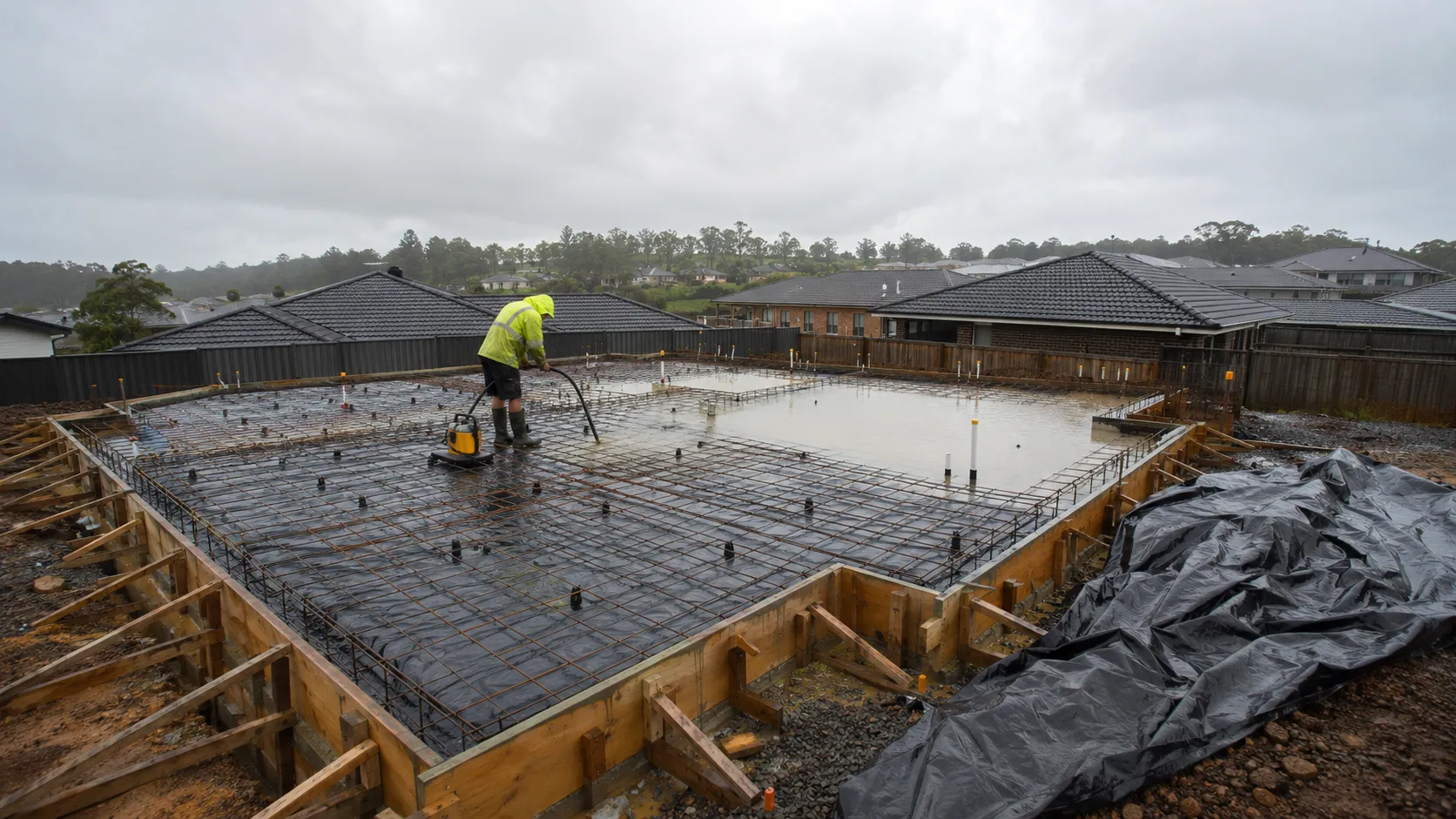
Standing water in footings, trenches or formwork should be removed before concrete is placed. Excess water can contaminate the surface, interfere with the concrete mix and contribute to a weak or uneven finish.
Rain falling on newly placed concrete can also:
Protective sheeting, temporary covers and drainage measures should be prepared when unsettled weather is forecast. However, protection may not be sufficient during sustained heavy rainfall.
High temperatures, low humidity and strong wind can cause moisture to evaporate rapidly from the concrete surface. This increases the risk of plastic shrinkage cracking and can shorten the available time for screeding, edging and finishing.
Risk-reduction measures may include:
The concrete supplier and contractor should determine whether the forecast conditions require changes to the timing or mix specification.
Cold weather slows setting and early strength development. In Hobart, low overnight temperatures and frost can also affect the prepared base, formwork and curing process. Avoiding common cold-weather concreting mistakes is particularly important when low temperatures, frost or extended setting times are expected.
Potential problems include:
The site may require insulation, temporary covers, revised curing arrangements or a supplier-approved mix adjustment. Concrete should not be placed on frozen or unsuitable surfaces.
Even when the site is fully prepared, delays at the batching plant or on the road can disrupt the schedule.
Concrete deliveries are usually planned in a sequence so that each truck arrives as the previous load is being placed. Significant gaps can leave workers waiting and may increase the risk of visible joints or inconsistencies between loads.
Delivery windows can be affected by:
The site must also be ready to receive each load. Where a truck cannot discharge within the agreed period, the supplier may need to redirect it or apply waiting charges.
Underestimating the required volume can interrupt a continuous pour while an additional load is arranged. Over-excavation, uneven ground and last-minute changes to slab dimensions can all increase the quantity needed.
Late changes to the specified strength, slump, aggregate, colour or admixtures may require a new batch or revised delivery schedule. Any permitted onsite adjustment should be authorised and controlled by the concrete supplier.
To reduce delivery risk:
For critical pours, requesting an early delivery slot may reduce the risk of delays from earlier bookings affecting the schedule.
Changes requested shortly before the pour can affect formwork, reinforcement, concrete volume, equipment and labour requirements.
Altering the footprint of the slab, the position of a step-down or the location of a service penetration can require formwork to be dismantled and rebuilt.
Increasing slab thickness may also mean:
Even a relatively small adjustment can affect several parts of the preparation.
Late structural changes may require additional bars, trench mesh, starter bars or thickened edges. The crew may need revised drawings or written instructions before proceeding.
If the correct reinforcement is not available onsite, the pour may need to be rescheduled while materials are sourced and inspections are rearranged.
Changing from plain concrete to exposed aggregate, coloured concrete, a burnished finish or decorative stencilling can alter:
These decisions should be finalised before the order is confirmed. Specialist finishes may also require dedicated contractors who need to be booked in advance.
Administrative and compliance issues can delay a project even when the physical site appears ready.
Before booking the pour, confirm that:
Obtaining Before You Dig Australia plans is an important first step, although onsite locating may still be required to confirm the position of underground assets. Asset-owner instructions should also be reviewed before excavation or ground preparation begins.
A final inspection should be completed before the concrete truck is due. The following checklist can help identify avoidable problems.
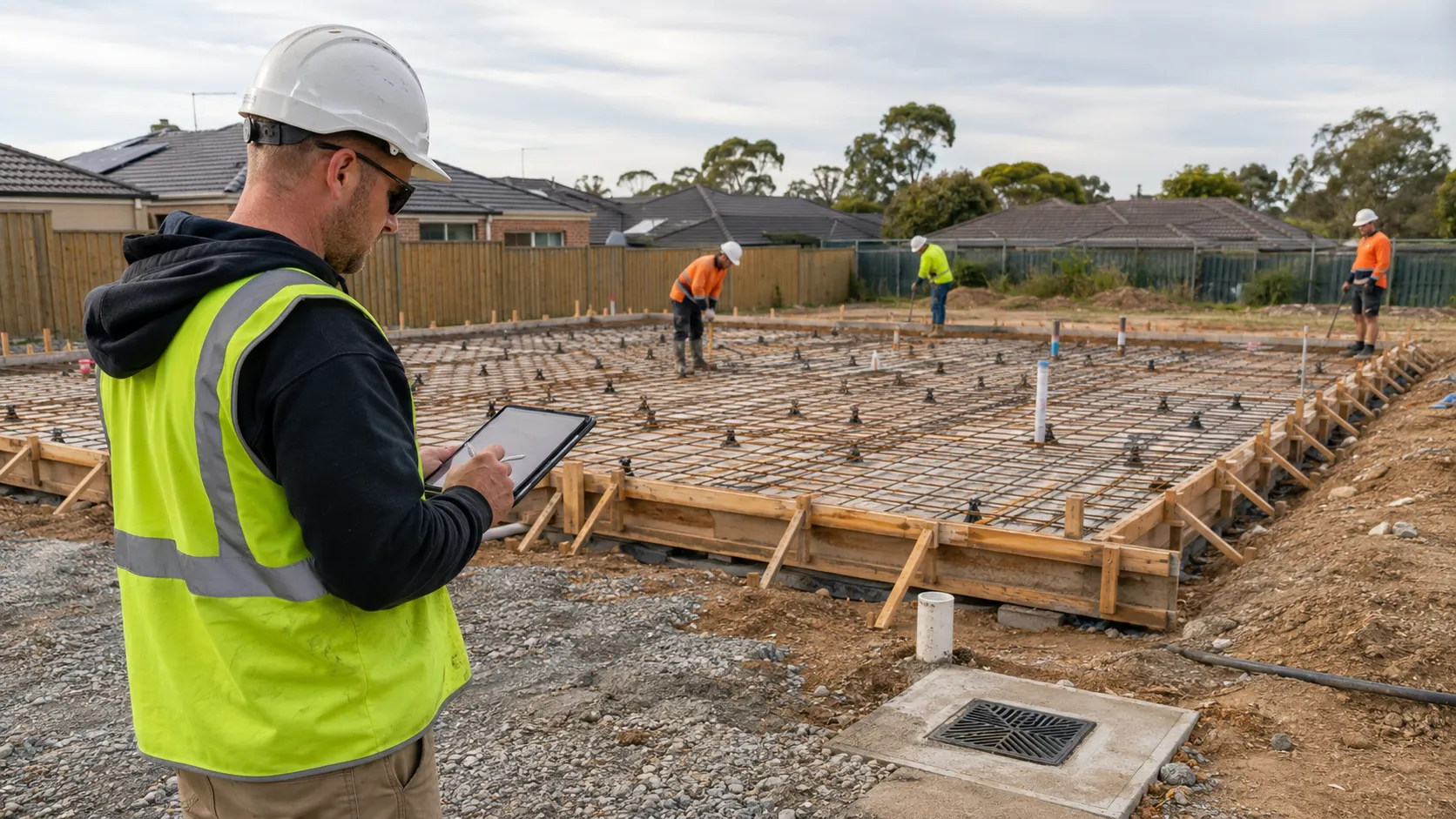
Successful concrete pours depend on preparation rather than luck. Access, ground conditions, formwork, reinforcement, levels, weather, inspections, equipment and delivery timing all influence whether work proceeds smoothly.
Many delays can be avoided by completing a detailed pre-pour inspection, resolving design questions early and maintaining clear communication between the builder, engineer, concrete supplier, pump operator and finishing crew. Final decisions about structural readiness, concrete specifications and weather suitability should be made by the appropriate qualified professionals.
Con-Tek Concrete can assist with site preparation, access planning and pour-day coordination for concreting projects in Hobart. Addressing potential issues before the concrete arrives helps reduce avoidable delays and supports a safer, more efficient and higher-quality result.
