CALL US TODAY

Concreters you can trust.
CALL US TODAY
Concrete cutting is often needed when existing concrete must be altered, repaired or prepared for new work. For projects involving concreting in Hobart, choosing the right timing and cutting method helps prevent unnecessary cracking, protect surrounding structures and achieve a clean finish.
Concrete may need to be cut for control joints, demolition, repairs, new plumbing or electrical services, or structural changes such as doorways and extensions. The method also varies on whether the concrete is freshly placed or already hardened.
Con-Tek Concrete provides concrete cutting and related services for residential and commercial projects. Knowing when concrete cutting is required can help property owners and contractors plan the work efficiently, reduce rework and protect the performance of the concrete.
Existing concrete may need to be modified during renovations, extensions, fitouts or changes to how a space is used. Concrete cutting allows specific sections to be removed or reshaped with greater control, helping create clean edges while limiting damage to the surrounding slab, wall or structure.
Here are some alterations:
The cutting method depends on the thickness, location and condition of the concrete, as well as the size of the alteration. Reinforcement, post-tension cables and concealed services should be considered before work begins, where the proposed cut could affect a structural element.
Controlled cutting can reduce vibration, cracking and unnecessary demolition compared with breaking concrete with heavy equipment. It also leaves cleaner edges for new construction, services or finishes.
Concrete cutting is used during demolition when specific sections need to be removed without unnecessarily disturbing the surrounding structure. It allows slabs, walls, driveways, paths and other concrete elements to be separated into manageable sections for controlled removal.
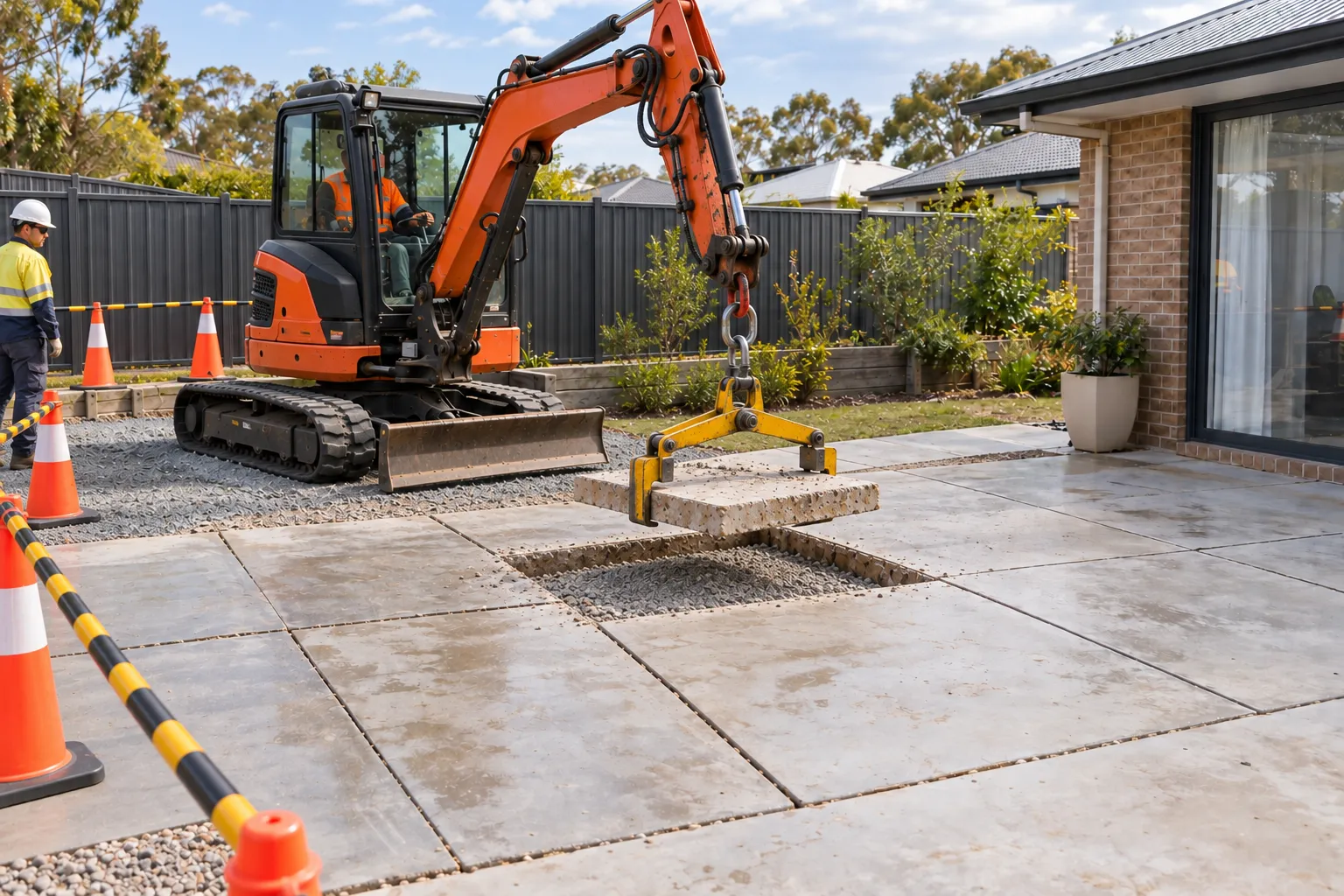
Saw cuts can define the area to be demolished before the concrete is broken out or lifted away. This is useful when part of a slab needs to remain in place, an existing structure is being altered or damaged concrete needs to be removed before repairs. Controlled cutting can also reduce vibration and limit damage to nearby finishes.
The cutting method depends on the thickness, reinforcement, location and access to the concrete. The removal sequence should be planned so sections can be handled safely without placing unnecessary stress on the remaining structure.
Work involving structural removal should also follow applicable demolition safety requirements, including appropriate planning and risk controls.
Control joints are cut into new concrete to help manage the cracking that naturally occurs as the concrete shrinks and responds to temperature and ground movement. By creating a planned line of weakness, the concrete is more likely to crack along the joint rather than randomly across the slab.
Correctly positioned control joints help manage concrete cracking by encouraging shrinkage movement to occur along planned lines.
The timing and depth of the cut are important. Cutting too early can damage the edges of the joint, while cutting too late may allow uncontrolled cracks to form first. The appropriate timing depends on factors like the concrete mix, weather conditions and slab thickness.
Joint placement should also be planned before the concrete is poured. Control joints are commonly positioned around changes in direction, corners and other areas where cracking is more likely. Properly planned and accurately cut joints can help maintain a cleaner appearance while reducing uncontrolled cracking.
Plumbing and drainage upgrades can require access beneath existing concrete slabs during renovations, extensions and repairs. Concrete cutting allows defined sections of a slab, path or driveway to be opened so new pipework can be installed without unnecessarily disturbing the surrounding concrete.
Concrete may be cut along the planned pipe route to create a trench for water supply, sewer or stormwater services. Controlled cutting can also provide access to damaged or blocked drainage lines beneath bathrooms, garages, driveways and other concrete surfaces.
The required opening depends on the pipework and site conditions. Existing services, reinforcement and nearby footings or structural elements should be considered before cutting, while the concrete can be reinstated once the plumbing or drainage work is complete.
Electrical upgrades can require access through existing concrete slabs, walls and floors during renovations, extensions and commercial fitouts. Concrete cutting and core drilling can create pathways and penetrations for conduits, cables and other electrical infrastructure without unnecessarily removing surrounding concrete.
Narrow cuts can be used to create channels for conduits beneath or through slabs, while core drilling produces clean circular openings through concrete walls and floors. The appropriate method depends on the size and location of the required penetration and the type of service being installed.
The opening should be positioned carefully to avoid unnecessary damage to the surrounding concrete. Where structural slabs or heavily reinforced elements are involved, the proposed opening may require additional assessment before cutting begins.
Concrete cutting can be required when renovations involve adding a new doorway, widening an entrance or creating a window opening in an existing concrete wall. Precise cuts allow the required section to be removed while helping maintain cleaner edges around the proposed opening.
New and widened openings can be cut to the required dimensions before the concrete is removed in manageable sections. This can reduce unnecessary vibration and limit damage to nearby finishes compared with breaking out a larger area.
Where the wall is load-bearing or forms part of a structural system, the proposed opening should be assessed before cutting. Reinforcement, beams, lintels and concealed services may affect the cutting sequence and the work required to support the remaining structure.
Concrete cutting can be used during repairs and maintenance when only a damaged or deteriorated section needs to be removed. Controlled cutting can isolate the affected area and create clean edges for concrete repairs or replacement without unnecessarily disturbing the surrounding concrete.
This approach can be useful for driveways, slabs, paths, floors and other concrete surfaces affected by cracking, settlement, impact damage or localised deterioration. The damaged section can be cut back to sound concrete before new material is installed.
The extent of movement and deterioration should be assessed when deciding between targeted repair or replacement.
Where recurring cracking is caused by movement, drainage problems or other underlying issues, the cause should also be assessed rather than simply cutting out the visible damage. Properly planned removal and reinstatement reduce unnecessary demolition and preserve sound areas of the existing surface.
Concrete cutting can be carried out on many types of concrete, including new and existing slabs, reinforced concrete, precast sections and concrete walls. The suitable cutting method depends on factors such as the concrete’s thickness, condition, reinforcement, location and the type of work required.
Newly placed concrete can be cut at the appropriate stage to create control joints and help manage shrinkage cracking. The timing of the cut is important because cutting too early can damage the joint, while cutting too late may allow uncontrolled cracks to form.
Existing hardened concrete can be cut for renovations, repairs, demolition, service installations and new openings. Slabs, walls, floors, driveways and other concrete structures can be cut into defined sections without necessarily removing the surrounding material.
Concrete containing steel reinforcement can also be cut using suitable equipment. Reinforcing mesh, steel bars and post-tensioned cables should be identified before cutting, particularly where the concrete forms part of a structural element.
Precast panels and other manufactured concrete elements can be cut or modified where openings, alterations or controlled removal are required. The cutting method depends on the size, thickness and construction of the precast element.
Load-bearing walls, floors, beams and other structural elements can be cut, but additional assessment may be required before work begins. Cuts that alter load paths or affect reinforcement can impact structural capacity if they are not properly planned.
Driveways, footpaths, patios, pavements and hardstand areas can be cut where sections need to be removed, repaired or modified. The condition of the concrete and access to the work area can influence the equipment and cutting method required.
Assess the type and condition of the concrete before cutting begins. This helps determine the appropriate equipment and method while reducing the risk of unnecessary cracking or damage to surrounding structures.

Several checks should be completed before concrete cutting begins to identify potential hazards, protect the existing structure and determine the most suitable cutting method. The assessment should consider what is within the concrete, how the proposed cut may affect the structure and what surrounds the work area.
Check for the following:
Where structural concrete or post-tensioned elements are involved, additional assessment or engineering advice may be required before cutting. Completing these checks first helps establish a suitable cutting plan and reduces the risk of damage, delays or unexpected hazards.
Concrete cutting needs to be carried out in a controlled manner to protect workers, surrounding structures and the remaining concrete. The process involves preparing the work area, setting up suitable equipment, carrying out the cut and removing the concrete safely.
The cutting area is cleared and surrounding surfaces, equipment and finishes are protected. Barriers or exclusion zones may be used where there is a risk of falling concrete, debris or equipment movement.
Equipment is selected according to the type, thickness and location of the concrete. Floor saws, wall saws, handheld saws and core drills may be used for different applications, with the equipment set up according to the planned cut.
The concrete is cut along the planned lines and to the required depth. Wet cutting may be used to suppress dust, while water and slurry are controlled to prevent slip hazards and damage to nearby areas.
Appropriate silica dust controls, such as wet cutting or effective dust extraction, should be used when cutting concrete.
Where sections are being removed, the cut concrete is separated into manageable pieces and taken away in a controlled sequence. Large or heavy sections may require lifting equipment or additional handling measures.
Dust, slurry and debris are removed once cutting is complete, leaving the surrounding area ready for the next stage of construction, repair or installation. Appropriate safety equipment and site controls should be maintained throughout the work, where cutting generates silica dust, noise, vibration or heavy debris.
Following a planned cutting process helps minimise unnecessary damage and keeps the work controlled from preparation through to clean-up.
Concrete cutting is about more than removing sections of concrete. Careful planning, the right cutting method and proper safety controls help protect surrounding structures, minimise rework and maintain the long-term performance of the finished work.
Con-Tek Concrete can assist with concrete cutting for repairs, alterations, service installations, openings and demolition. Early planning helps ensure each cut is carried out accurately and safely while keeping the wider project on track.
