CALL US TODAY

Concreters you can trust.
CALL US TODAY
Cracks in concrete are often overlooked until they become visually prominent across driveways, patios or warehouse floors, yet not all cracks indicate the same level of concern. Some cracks are cosmetic and repairable, while others can point to underlying movement, moisture issues, poor base preparation or structural stress that may require more extensive work. For anyone working with concreters in Hobart, understanding these differences can help avoid unnecessary repairs and premature replacement.
This article explains how to interpret common crack patterns, what they reveal about the condition of a slab and how factors such as age, use, drainage and ground conditions influence the decision between repair and replacement.
Different crack patterns in concrete can reveal what is happening below the surface. Reading these signs correctly helps determine whether a simple repair is enough or whether the slab may be nearing the end of its usable life. The width, depth, direction and location of a crack all provide clues about the likely cause and severity.
Hairline surface cracks may only indicate normal shrinkage as concrete cures, while wide, uneven or recurring cracks often point to ground movement, overloading, drainage problems or moisture entering the slab. Understanding the difference helps prevent money being wasted on repairs that will not last or replacement work that may not be necessary.
Very fine hairline cracks that follow random patterns on the surface often come from normal drying and shrinkage. These usually:
If they remain stable over time and the slab is otherwise level, these cracks can often be managed with cosmetic crack filling and sealing to help keep out moisture, dirt and contaminants. However, if hairline cracks continue spreading or new ones appear season after season, it may indicate poor curing, inadequate joint placement or minor movement in the base that needs closer attention.
Cracks that follow a straight line often align with control joints or saw cuts. These joints are intentionally placed weak points designed to manage expected shrinkage movement as the concrete cures. In many cases, a narrow crack along a control joint is normal, while minor chipping along the joint edge is usually cosmetic.
These cracks are often good candidates for repair rather than replacement, provided the slab is still level and stable. Proper joint sealing can help prevent water from penetrating the base and turning a minor joint crack into a more serious issue over time.
Wide cracks, generally more than 3 mm, that show vertical movement or a step between the two sides are stronger indicators of ground movement or loading problems. Common warning signs include:
Settlement cracks, where concrete has sunk, often point to poor subgrade compaction, erosion from drainage issues or long-term soil consolidation. Heaving cracks, where sections lift, may be linked to reactive soils, trapped moisture or tree root pressure. In many of these cases, surface crack repair alone will not last unless the underlying cause is addressed.
Not every crack means a slab or driveway is at the end of its life. Many defects can be repaired if the concrete is still structurally sound and the damage is limited in scope. Knowing these signs helps prevent unnecessary replacement and keeps the focus on practical, cost-effective repair.
Repair is usually feasible when cracks are relatively small, the slab remains level and there are no signs of ongoing severe movement. Surface condition, crack pattern and how the concrete behaves under normal use all help determine whether targeted repair is appropriate.
Fine, tight cracks that are mostly cosmetic are strong candidates for repair. These may include hairline cracks less than about 1.5 mm wide, narrow shrinkage cracks that formed as the concrete cured, or isolated cracks in low-load areas such as paths, patios and light-use outdoor spaces.
If the crack edges are still aligned and there is no crumbling or spalling along the sides, the concrete usually has enough integrity for crack filling, sealing or route-and-seal repairs. When these narrow cracks are dry, clean and not widening, flexible sealants or suitable repair products can help reduce moisture ingress and slow further deterioration.
Concrete that is cracked but still sitting where it was originally placed is usually more suitable for repair. Useful signs include:
If traffic across the area does not cause pumping, rocking or rattling, and pedestrians or vehicles do not feel a clear step at the crack, joint sealing, patching or resurfacing may extend the life of the slab. Where minor settlement has occurred but stopped, levelling methods may also be suitable without full demolition.
Concrete that is generally sound but has limited areas of deterioration is often suitable for repair. Repairable conditions may include:
If the surrounding concrete is hard, dense and not hollow-sounding when tapped, the damaged area can often be removed back to sound material and rebuilt with patching mortar or an overlay system.
Cracks caused by normal shrinkage, minor temperature movement or light surface wear are usually manageable with repair. If there is no heaving, ongoing soil washout, major reinforcement corrosion or repeated movement, the concrete can often be stabilised and protected.
In these cases, the focus should be on sealing cracks, improving drainage around the slab and monitoring for future movement rather than committing straight to full replacement.
Not every concrete crack can be solved with patching or surface repair. In some situations, the damage runs deeper into the slab or the structural integrity has already been compromised. Repair may only delay the inevitable, making full replacement the safer and more cost-effective option.
Recognising when concrete has moved beyond simple repair is important. The signs below usually indicate conditions where replacement should be considered rather than repeated patching or resurfacing.
Hairline or isolated cracks are often suitable for repair. When cracks are numerous, large or spread across most of the surface, the slab may be failing as a whole. Concrete may require replacement when:
These patterns often point to poor base preparation, ongoing soil movement, inadequate reinforcement or repeated moisture problems. Filling the cracks may improve appearance briefly, but the underlying cause can continue opening new cracks or lifting and sinking sections of the slab.
If sections of concrete have shifted noticeably up or down relative to each other, repair products cannot properly bring them back into alignment. Full replacement is often indicated when:
Minor settlement can sometimes be stabilised with lifting techniques or localised repair. However, when movement is widespread or continues to progress, the base beneath the concrete usually needs to be corrected and the slab recast. Patching over severe heaving or settlement only masks the symptoms while safety risks and drainage problems worsen.
Some cracks and defects extend well below the surface and affect the full thickness of the slab. Full replacement may be the better option when:
Poor concrete mix, inadequate curing, surface wear or long-term moisture exposure can damage the top layer so extensively that resurfacing products may not bond reliably. If tapping the concrete produces hollow sounds, it may indicate delamination or poor adhesion within the slab itself. In these cases, a new properly prepared and placed slab is often more reliable than repeated short-term repairs.
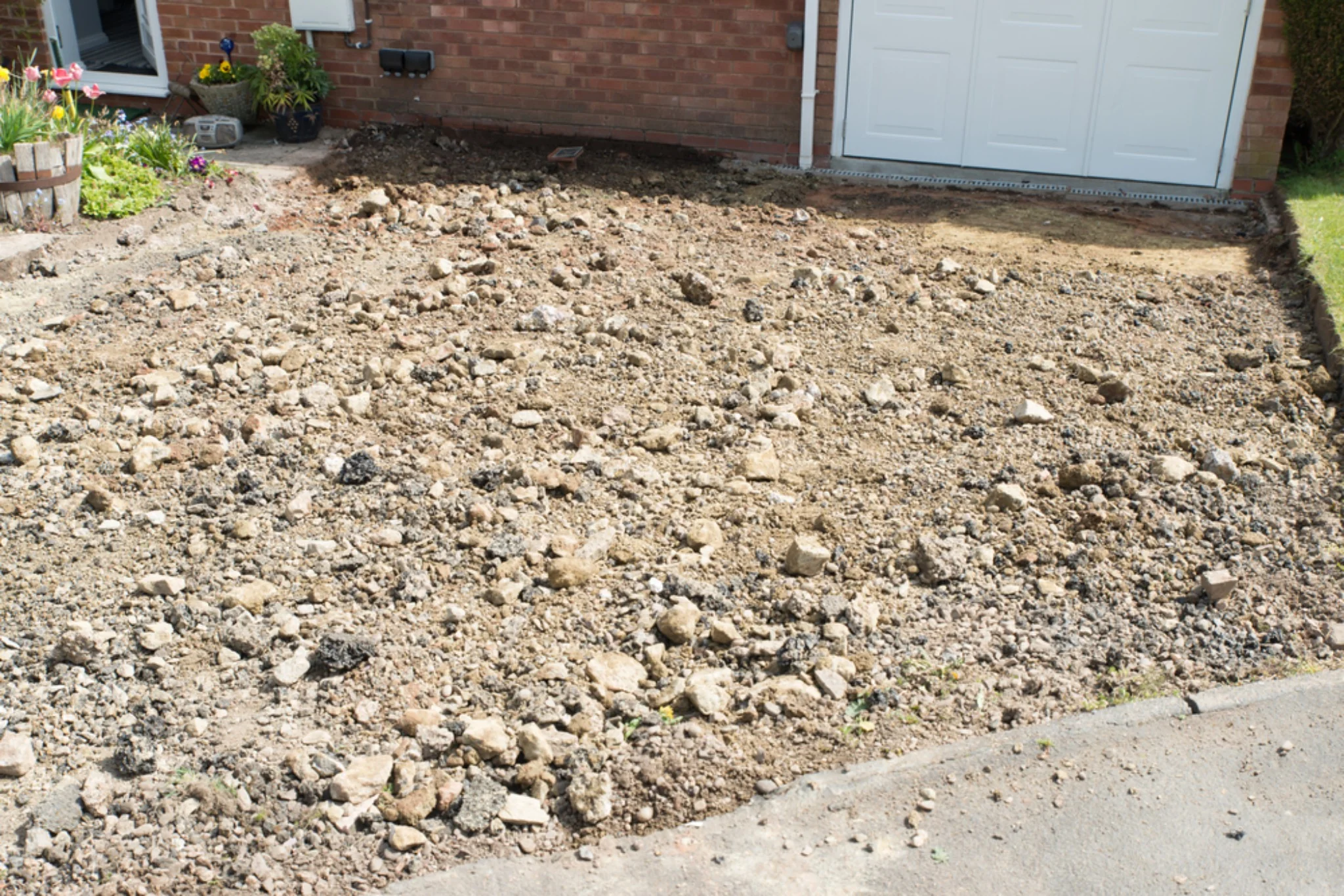
Concrete rarely fails all at once. Small cracks often start as cosmetic issues, then deepen, widen and spread as conditions around the slab change. Understanding what makes cracks grow helps determine whether timely repair is still possible or whether replacement is becoming more likely.
Several predictable forces act on cracked concrete day after day. Moisture, temperature changes, loading and ground movement all contribute to ongoing deterioration. When these factors combine, damage can accelerate quickly, especially in older concrete or areas with poor drainage.
Water is one of the main drivers of crack growth. Once a crack opens, it allows rainwater, surface runoff or subsurface moisture to penetrate deeper into the slab and base. Inside the crack, moisture can:
This is especially relevant in Tasmania, where regular rainfall, damp ground and sloping sites can place extra pressure on concrete driveways, paths and outdoor slabs. If water is allowed to sit around or under the slab, even small cracks can become more serious over time.
Concrete relies on consistent support from the ground beneath. When that support shifts, existing cracks are often the first place movement shows up. Cracks tend to worsen when:
As the base settles or heaves, one side of the crack may drop or rise, creating a step or lip. Once this type of differential movement appears, the crack is likely to keep opening and closing under normal use, gradually breaking the concrete edges and creating trip hazards or structural separation.
Every load placed on a slab interacts with existing cracks. Even everyday use can become damaging when pressure is repeated over weakened sections.
Traffic from vehicles, equipment or heavy footfall concentrates stress at crack tips. Over time, small fractures at the ends of each crack can join together and allow the crack to travel across the slab. Poor joint placement or a lack of control joints can also force shrinkage and temperature movement into random cracks rather than planned relief points.
Thermal expansion and contraction add to this effect. Concrete expands in heat and contracts in cold. When movement is restrained by adjoining slabs, walls or fixed structures, stress is often released through existing cracks, causing them to lengthen or branch into new ones.
Minor concrete damage often looks worse than it is. Hairline cracks, small surface pits or slight flaking can usually be stabilised and blended in without tearing out an entire slab. Choosing the right repair method protects the surrounding concrete, helps prevent moisture from getting in and may delay or remove the need for full replacement.
Before any repair, the concrete must be sound. Minor repairs are suitable only where the slab is stable, with no ongoing movement, no widespread crumbling and no evidence of major soil or drainage problems beneath the surface.
For narrow cracks, filling and sealing are often the first repair options considered. The crack is cleaned out, loose material is removed and a suitable sealant or repair compound is applied to close the gap.
This type of repair is most useful when the crack is stable and not showing signs of vertical movement. It helps reduce moisture entry, limits dirt build-up and can improve the appearance of the slab. However, sealing will not stop cracks caused by ongoing ground movement, poor drainage or structural stress.
Localised surface damage that affects only a shallow depth is usually a good candidate for patching. This includes spalls around joints, chipped slab edges or small pits in the surface.
Patching involves removing all weak or loose concrete until only solid material remains. The area is cleaned free of dust and may be primed with a bonding agent. A suitable repair mortar is then packed or trowelled into the void. These mortars usually bond better than plain concrete and are better suited to ongoing moisture exposure, traffic and general weathering.
Finishing the edges so the patch blends into the existing slab helps reduce trip points and improve appearance. In visible areas such as front entries, paths and patios, the surface can often be broomed or textured to better match the surrounding concrete.
Where damage is shallow but spread over a larger area, such as light scaling, minor surface dusting or small map cracking, resurfacing may be more effective than spot patching. A thin overlay or resurfacer is applied over the cleaned slab to create a new wear layer.
Resurfacing products are typically polymer-modified cement blends that can be broomed, trowelled or squeegeed over prepared concrete. All contaminants, such as oil, paint or curing compounds, must be removed first so the overlay bonds properly. Joints should also be re-established through the overlay to allow controlled movement and reduce the risk of random cracking in the new surface.
Determining whether cracked concrete requires repair or full replacement depends on the cause of the cracking, the extent of the damage and how the slab is performing overall. Minor, stable cracks that remain surface-level can often be repaired effectively, helping restore appearance and prevent further deterioration.
In contrast, widespread cracking, vertical displacement, ongoing movement, serious drainage problems or deep structural damage usually indicate that replacement may be the more durable option. For Hobart and Tasmanian conditions, drainage, moisture exposure, sloping sites and ground movement should always be considered before choosing a repair method.
A careful assessment helps ensure the solution is practical, durable and cost-effective, rather than simply covering cracks that are likely to return.
